Patagonia Line exists to show this corner of the Última Esperanza to people who've never fished it. The operation is small on purpose: two guides, 22 km of private river, 8 lakes, and a 3-room lodge that the same family built and runs. Everything we do — from the truck pick-up at 8:30 AM to the streamside lunch to the beer at dinner — is handled by people who live in Puerto Natales year-round.

Last updated · May 2026 Get in touch
The story

From the Última Esperanza, home again.

How a kid from Puerto Natales ended up guiding clients from Denver, Lyon and Brooklyn on the rivers he grew up fishing.

Ben grew up on the Última Esperanza Sound. His father was a sheep farmer at Cerro Castillo; his mother taught school in town. By age ten he was tying his own woolly buggers from sheep wool and fishing the Río Serrano with a fibreglass rod his uncle had brought back from a season in Argentina.

He left south at 19 to guide in Junín de los Andes, six seasons on the Chimehuín, the Malleo and the Collón Curá. The lodges there taught him the craft — 60 clients a week, 14 guides, professional kitchens, immaculate logistics. He learned to cast left-handed, row a drift boat in serious wind, and fix anything that broke with a Leatherman and a roll of electrical tape.

In 2013 he came home. The plan was simple: build a tighter, smaller operation than the ones he'd worked for in Argentina — one where the same guide saw you each morning, the food came from the same kitchen each night, and nobody on the boat had been there less than five years. Patagonia Line ran its first season in November 2013 with two clients, one truck, and a borrowed cabin.

The Line Lodge opened in 2018 — three rooms on a property his family had held since 1962, 1.5 km from the town centre, built room by room with local craftsmen using lenga and coigüe timber. It is still the only building on the operation that has his name on the deed.

The guides

Two guides. Every trip in person.

Every Patagonia Line trip is guided by Ben or Martín — no rotating freelancers, no surprises. Sernapesca licensed and on these waters all season, every season.

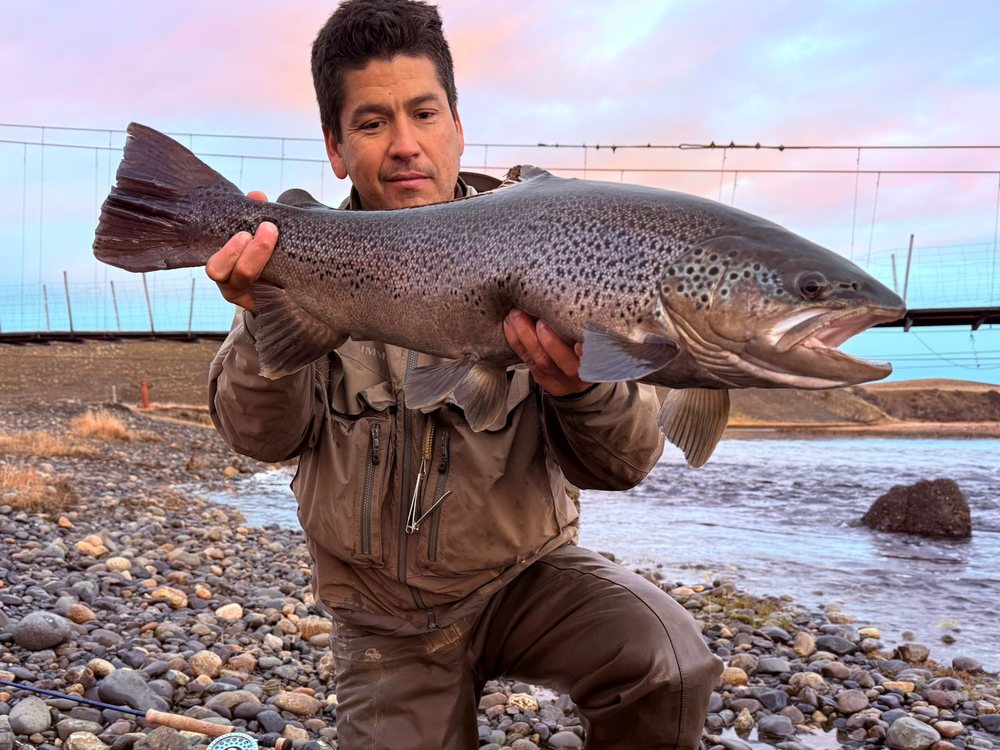
Ben holding a sea-run brown trout at dusk

Benjamin · Founder & Head Guide

Puerto Natales, Chile · 16+ years of experience · ES / EN

Ben is a fly fishing guide with more than 16 years of experience and has been working across different destinations in Patagonia since 2013.

He has extensive knowledge of the region's rivers, lakes, and lesser-explored waters, and is highly respected within the angling community.

He guides anglers of all skill levels in pursuit of local species, providing access to exclusive private fishing waters that offer a unique experience in the heart of Patagonia's wilderness.

He is fluent in English and shares his experience, local knowledge, and passion for fly fishing with every guest.
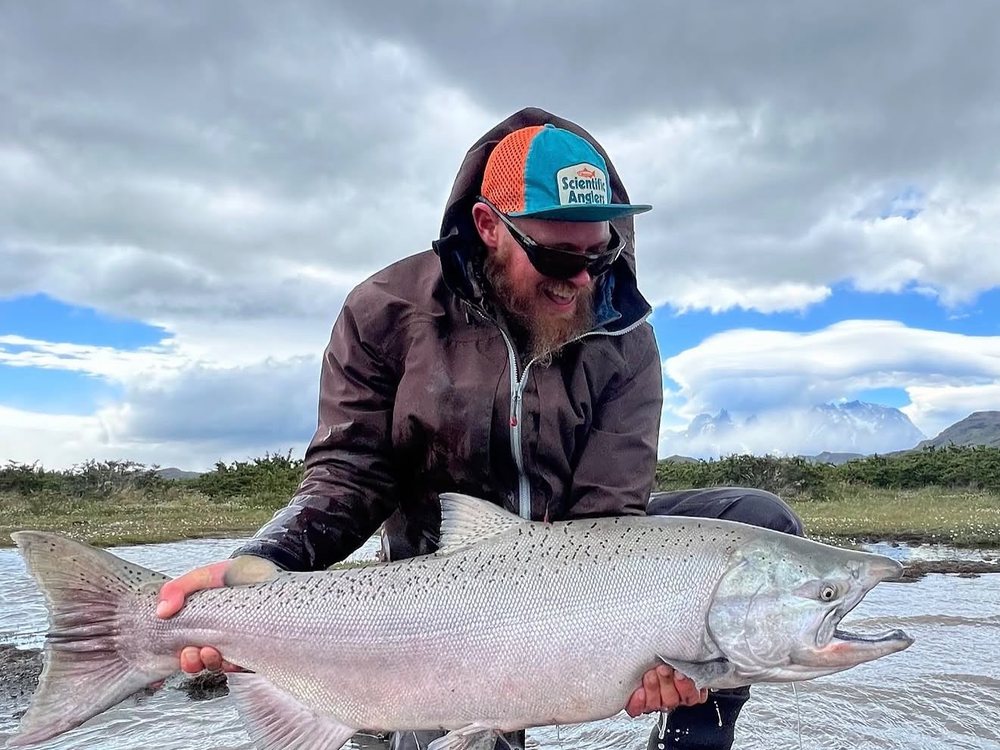
Martín holding a king salmon below the Paine massif

Martín · Guide

Patagonia Line guide team

Martín guides full days and lodge weeks across the rivers and lakes of Última Esperanza — streamer water, spring creeks and the king salmon runs. He works alongside Ben on every program of the season.

Our access

14 river miles. Three estancias. One rotation.

We hold long-term private-access agreements with three estancias that together cover 22 km (14 river miles) of unpressured water. No walk-ins, no public traffic, no rod-sharing with other operators.

  • Estancia Río Serrano — 9 km of the lower Serrano including the sea-trout pools.
  • Estancia Cerro Castillo — 7 km of spring-creek meanders, our trophy-brown water.
  • Estancia Tres Pasos — 6 km of freestone river plus access to Lago Tres Pasos.

Rotation rule: no beat is fished two days running. With two guides and three properties, every angler gets a fresh river each morning — and the water gets four to six days of rest between trips.

Philosophy

Catch and release. Leave no trace. Eat the invader.

Three principles, applied identically across every program we run. They are why our trophy water is still trophy water after a decade.

Barbless and catch-and-release as standard

Every fly that comes out of our boxes is barbless. Every trout — brown and sea-run — goes back in the water. We use rubber nets, keep fish in the water during photographs, and time every release. A 6-pound brown landed in 90 seconds swims away in five.

Leave-no-trace at the riverbank

Streamside lunches happen on gravel bars or on tarps, never on vegetation. Everything we pack in comes out — and a little extra if we find it. Truck tracks stay on established ranch roads. Wading paths rotate so we don't carve trails into the banks.

The invasive salmon retention programme

Pacific king salmon is not native to Patagonia — it escaped from sea-farm pens in the 1990s and has established itself in the river systems we fish. Under Sernapesca guidance we retain the salmon we catch (within bag limits) and serve them at the lodge or donate to the local food bank. Every retained salmon is one fewer competitor for native trout fry.

Partnership with Salmón Salvaje Chileno

We donate 1% of gross revenue and roughly 200 guide hours per year to Salmón Salvaje Chileno, the Chilean NGO working on native-species recovery in Magallanes. Our guests receive a year-end summary of where their conservation contribution went.

Recognition

Featured by the people who actually fish.

We don't buy press. The mentions below came from writers who booked a week with us, fished alongside the guides and went home to file their copy.

2023

Fly Fisherman Magazine

"Patagonia Line · Featured Operator". Six-page feature on the sea-run brown trout fishery of the Última Esperanza Sound.

2024

Hatch Magazine

"The Patagonia Roundup". Listed among the four southern-cone operators worth crossing a continent for.

2025

Travel + Leisure

"Top 10 fly fishing destinations". Patagonia Line cited as the recommended outfitter for Torres del Paine.

Plan your trip

Come fish with us.

We accept 22 anglers per month and the peak weeks (Feb–Mar) fill 6–9 months ahead. Send us your dates and we'll send back a tailored proposal.

Request a proposal WhatsApp the guide